


From Chains of Gold to Afrofuturism by Gregory Esparza
- Watts72

- May 16, 2019
- 3 min read
Updated: Sep 16, 2021
The Bar-Kays

We would be remiss not to contemplate the gold chains worn by Isaac Hayes and The Bar-Kays at Wattstax in 1972. I contemplated what those chains could have signified and as an artist myself, yes, sometimes it’s all about just looking fly onstage, or as this generation says, having swag, but other times coded messages can go out into the world whether the artists intended them to or not. Which means all content onstage is left to the observer and their interpretation of what they think they are seeing and hearing from an artist’s sounds, lyrics, and fashion statement. A transition of ideas becomes a part of the experience. Gold itself, the, “shiny star matter … chemically speaking …is a transition metal” (Pappas, LiveSciene 2016). So, in the case of Wattstax and the fashion statements made by Isaac Hayes and The Bar-Kays; I had the following thoughts to impart.
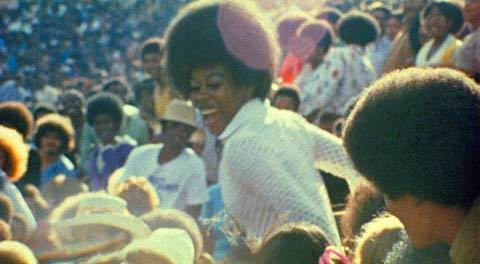
When anyone thinks of gold, they can easily catch the fever right away and think about being set for life if they had gold in large quantities. So, quite possibly, the gold chains worn by the Wattstax artists, may have symbolized a reclamation of the wealth of talent and culture they bring to humanity. It is also acknowledging their ideological shift as a people self-determined and on the upswing by the 1970s, possibly stating the wealth I used to make for oppressors is now mine. Or, the gold chains could have been a critique about how black bodies in chains were exploited for their labor, making generations of wealth for the white man. Thus, the black man had come to symbolize the gold itself, where chains used to contain and abuse them, now the gold chains reflected agency and liberation. Unlike the chains that contained slaves on ships and plantations for hundreds of years, these transitional chains came with a mic in hand and electrified instruments to allow their voices to be heard soulfully loud and clear. At Wattstax claims of Black Pride were made for all to hear. Donning the gold attire went hand in hand with Black Power, since despite generations of structural racism, the black man and woman were never permanently kept down. Far from equality and a perfect world, but in essence, the black man had turned his situation to gold, and within Black Power now looked toward a future of possibility. Ultimately, the gold chains brought a sense of imagination, hope, science fiction, the cosmos, and "Afrofuturism" (Dery).
"Donning the gold attire also went hand in hand with Black Power, since despite generations of structured racism, the black man and woman were never permanently kept down."
It should also be remembered that Wattstax happened in 1972, falling right in-between two influential albums of blues-rock, and gospel-funk sounds with Funkadelic being released in 1970 and The Mothership Connection in 1975. The albums, although not from Stax artists, were created by another seminal act, with the funky visionary, George Clinton and his Parliament and Funkadelic units, also known as P-Funk. George Clinton created his funk with alter-ego personas, such as “Star Child” and “Dr. Funkenstein,” along with Bootsy Collins and his band joining Funkadelic in 1972, as they took traditional black sounds of blues, soul, and spirituals, and mixed them with rock n roll in creating their funky music. On the Funkadelic album, African-American historian Ricky Vincent described how songs like, “’I’ll Bet You’ and ‘Music for My Mother’ captured the gritty realism and urban blight of black rock in 1970” (234).

Therefore, it was from those hard realities of urban renewal, lack of job opportunities, police brutality and the United States privileging the white suburbs while ignoring or socially engineering the social nightmare of the ghettos such as Watts, that made the visually shining gold chains worn by the Stax artists appear to leap into the future. It was part escapism from the grind of oppression and part hope with an Afrofuturistic worldview.
Three years prior to P-Funk’s album, Mothership Connection, within the tenets of Black Power and Nationalism, African Americans and black folks globally had not only the past to contend with, but now, with music such as P-Funk’s, along with the Stax artists, such as Isaac Hayes and the Bar-Kays donned in gold, could imagine a better, more positively funky future.
Works cited:
Dery, Mark. "Defining Afrofuturism." Subcultures and Sociology: Grinnell College. Last modified, n.d. https://haenfler.sites.grinnell.edu/afrofuturism/
Pappas, Stephanie. “Facts About Gold.” LiveScience. Last modified April 15, 2016.
Vincent, Rickey. Funk: The Music. The People, and the Rhythm of The One. Foreword by George
Clinton. New York: St. Martin‘s Griffin, 1996.
Photo sources:
The Bar-Kays: https://www.latimes.com/entertainment/music/la-et-ms-black-music-wattstax-20150819-story.html
Issac Hayes Photo: http://bowdigs.blogspot.com/2016/02/wattstax.html
Source:
Concertgoers Dancing photo: https://thecinephiliac.com/2015/07/31/wattstax-1973-black-pride-and-good-music/
Comments